Yishun/Online Classes
- IP3 (2026): Sunday @ 12.30pm
- IP4 (2026): Sunday @ 10.00am
Toa Payoh/Online Classes
- IP3 (2026): Tuesday @ 4.30pm
- IP4 (2026): TBC
Click here for our IP Class Schedule Overview
For IP5/IP6:

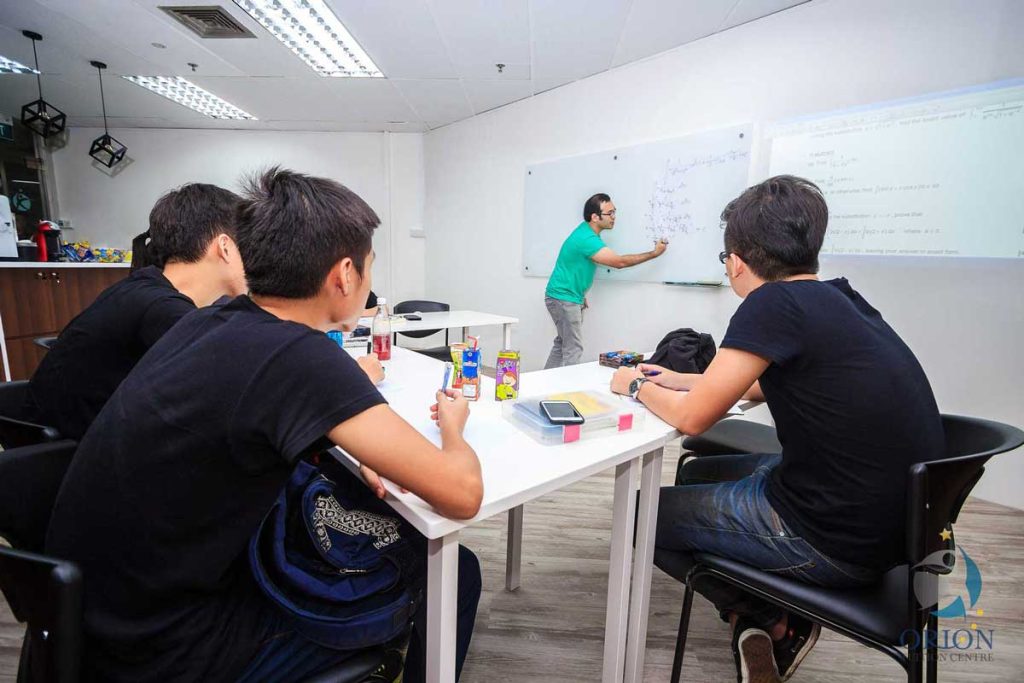
Our Integrated Chemistry program has achieved 90% distinction rates for the IP4 end-of-year exam in 2025. Limited slots available for 2026.
Yishun/Online Classes
Toa Payoh/Online Classes
Click here for our IP Class Schedule Overview
For IP5/IP6:
Toa Payoh Central
Blk 190 Lor 6 Toa Payoh
#04-508A
Singapore 310190
Yishun Chong Pang:
Blk 101 Yishun Ave 5,
#02-95
Singapore 760101
Click here for our 1-on-1 private coaching availability.

GST absorbed with no hidden costs nor deposits.

Average class size of 10

Our tutor regularly takes the initiative to clarify doubts via Zoom and Whatapp.

Hundreds of bite sized summary lessons and guided practice for our registered students to facilitate their revision. Preview Here
IP Chemistry covers the core principles of O-Level Chemistry but at a faster pace, greater depth, and with a stronger emphasis on conceptual application rather than structured recall. Topics include Atomic Structure, Chemical Bonding, Stoichiometry, Acids and Bases, Redox Chemistry, and Organic Chemistry — introduced progressively and building significantly in complexity by IP3/IP4.
Unlike O-Level Chemistry, where students follow a standardised MOE syllabus, IP Chemistry curricula differ between schools. Raffles Institution, Hwa Chong, and National Junior College each have their own scope and sequence.
This means tuition must be tailored to the student’s specific school — a generic approach simply does not work for IP Chemistry.
IP Chemistry at Orion is taught by Ms Agnes, a former MOE Junior College Chemistry teacher with over 15 years of A-Level programme experience. Ms Agnes is well regarded for her ability to break down complex Chemistry concepts into clear, digestible explanations — a skill she applies equally effectively to IP-level content.
What makes Ms Agnes particularly well-suited to IP Chemistry teaching is her understanding of the full Chemistry progression — from secondary school foundations through IP level and into H2 Chemistry at A-Level. Having taught at all three levels, she knows exactly where IP Chemistry concepts become the prerequisites for H2 Chemistry difficulty, and she structures her IP lessons with that long-term view explicitly in mind.
Her approach to IP Chemistry teaching is school-specific rather than generic. Because IP schools — including Raffles Institution, Raffles Girls’ School, Nanyang Girls’ High School and CHIJ St Nicholas Girls’ School — each design their own Chemistry curriculum with different scope, sequence, and assessment expectations, Ms Agnes identifies where each student’s school currently sits in their programme before structuring lessons. Students from different schools can coexist in the same class because the class size is small enough for Ms Agnes to provide individually relevant guidance.
Ms Agnes is known among IP Chemistry students and parents for her patience, thoroughness, and the quality of her structured notes — which students consistently describe as more accessible than their school materials. She is available via WhatsApp and Zoom between sessions for questions, and provides targeted revision materials ahead of school assessments.
Parents frequently highlight her patience and thoroughness as key reasons students stay with Orion for multiple years.
Several factors contribute. First, IP schools move at an accelerated pace — students who miss or misunderstand one concept in class have very little time to recover before the next topic builds on it.
Second, IP Chemistry is taught with the expectation of greater independent application, meaning there is less hand-holding than students experienced in primary school. Third, the peer environment in IP schools is highly competitive, which can make students reluctant to ask for help or admit confusion.
The result is that gaps compound quietly until they become visible as a failing grade — often as late as IP4. Early structured support prevents this from happening.The result is that gaps compound quietly until they become visible as a failing grade — often as late as IP4. Early structured support prevents this from happening.
The connection between IP Chemistry and H2 Chemistry is deliberate in how Ms Agnes structures the programme. Core IP Chemistry topics — particularly Chemical Bonding, Energetics, Equilibria, and Organic Chemistry foundations — are the direct precursors to the most challenging H2 Chemistry chapters.
Students who master these concepts at IP level arrive at JC with a significant advantage over peers who scraped through without true understanding.
Ms Agnes specifically emphasises these bridging topics during IP3 and IP4, ensuring students are not just exam-ready for their next school assessment but genuinely prepared for what H2 Chemistry will demand of them.
Yes — and this is one of the strongest reasons to invest in IP Chemistry support during IP3 and IP4, rather than waiting until IP5 or JC.
H2 Chemistry at A-Level is one of the most demanding sciences in Singapore’s curriculum. Students who arrive at IP5 or JC with a genuine understanding of IP Chemistry foundations — particularly in Chemical Bonding, Organic Chemistry mechanisms, and Energetics — consistently find the transition to H2 Chemistry significantly more manageable than students who covered IP Chemistry by surface memorisation alone.
At Orion, Ms Agnes structures IP Chemistry lessons with this long-term progression explicitly in mind. Topics are taught with the H2 Chemistry connection in view — so students not only perform well in their IP school assessments but arrive at H2 Chemistry with the right conceptual foundation already built. For students who continue with Orion from IP into H2 Chemistry, Ms Agnes is already familiar with their specific learning gaps and strengths, which means no time is lost in the transition.
Our IP Chemistry programme achieved 90% distinction rates for the IP4 end-of-year exam, most recently in 2025. Students who progressed from Orion’s IP Chemistry into H2 Chemistry consistently describe the transition as more manageable than their peers experienced.
Yes — and this is one of the most important things to understand before choosing an IP Chemistry tuition provider. Unlike O-Level or H2 Chemistry, which follow a standardised national syllabus, IP Chemistry is designed and sequenced independently by each school. A student at CHIJ St Nicholas Girls’ School and a student at Raffles Institution may be studying completely different Chemistry content in the same school term.
At CHIJ St Nicholas Girls’ School, the IP Chemistry curriculum places strong emphasis on methodical concept building. Internal assessments tend to test foundational understanding clearly and directly. Students from CHIJ St Nic often have solid basic Chemistry knowledge but find the jump in application complexity difficult when they reach IP4 Organic Chemistry.
At Raffles Girls’ School, the IP Chemistry pace is brisk and assessments frequently require students to connect Chemistry concepts with real-world contexts — a skill that requires both content knowledge and the ability to reason under unfamiliar conditions.
At Raffles Institution, IP Chemistry introduces Organic Chemistry concepts relatively early, and assessments place strong emphasis on mechanistic reasoning and experimental analysis from IP3 onwards.
At Orion, Ms Agnes is familiar with the specific syllabus sequences and assessment styles of these schools. IP Chemistry classes are structured around each student’s school curriculum — so lessons are always relevant to what your child is actually covering right now.
Absolutely. Because each IP school designs its own Chemistry curriculum, our approach is always school-specific rather than generic. Before structuring lessons, we identify where your child’s school currently sits in their Chemistry programme and what assessments are coming up.
This depends on your child’s goals. If they are aiming to take H2 Chemistry at A-Level — which most IP science-stream students do — then a passing grade in IP Chemistry is not a reliable predictor of H2 Chemistry readiness. H2 Chemistry is significantly more demanding.
Students who were borderline in IP often find themselves seriously struggling in JC1 without stronger foundations. If your child has their sights set on university courses that require strong Chemistry results — Medicine, Pharmacy, Chemical Engineering — investing in a stronger IP foundation now is far more efficient to handle the rigour at A-Level.
Most students benefit from starting IP Chemistry tuition at IP3, when the syllabus deepens considerably and school assessments become more rigorous.
Those who join at IP4 can still benefit significantly, particularly with focused support on the topics most relevant to their upcoming assessments and their future H2 Chemistry coursework.
The key is not to wait until a crisis point — Chemistry gaps, once established, tend to widen rather than resolve on their own.
Yes — and this concern comes up regularly, particularly among parents whose child has been struggling and is hesitant about joining a class with other students.
Our IP Chemistry students come from CHIJ St Nicholas Girls’ School, Raffles Girls’ School, Raffles Institution, Nanyang Girls’ High School and other IP schools. They join at different points in the year, with different levels of foundation, and from schools that cover IP Chemistry content in different sequences.
Ms Agnes’s approach is the same for every student regardless of how far behind they feel: she starts by identifying where the foundational gaps are. For some students, this means revisiting Atomic Structure and Chemical Bonding before tackling IP4 Organic Chemistry. For others, it means clarifying specific misconceptions in Energetics before the class moves forward. This is not remedial catch-up — it is the structured foundation-building that makes higher-level learning possible.
Because every student goes through this process, students from different schools and different starting points improve together effectively in the same class. Parents consistently tell us that the foundation phase — not just the weekly lessons — is what made the most meaningful difference for their child’s progress in IP Chemistry.
At Orion, learning does not end when the lesson does. Ms Agnes is available via WhatsApp and Zoom for students who have questions between sessions — a level of accessibility that parents consistently highlight in reviews.
Students also benefit from Ms Agnes’s detailed chapter notes, definition compilations, and formula references, which are specifically designed to support independent revision outside of class.
For students approaching key school assessments or internal exams, Ms Agnes may also provide additional practice papers and targeted question sets to sharpen readiness.
No. This is a decision we have made deliberately and stand by.
IP Chemistry involves a genuine progression of concepts — Atomic Structure and Bonding in lower IP feeds directly into Energetics, Equilibria, and Organic Chemistry in IP3/IP4, which in turn feeds into H2 Chemistry at JC. Each stage builds on the one before. A student who has not properly understood Chemical Bonding in IP2 will find Organic Chemistry in IP4 genuinely difficult — not because they lack ability, but because the conceptual scaffolding is missing. A crash course that covers Organic Chemistry intensively in a few days does not rebuild that scaffolding. It teaches surface patterns on an unstable base.
We are also honest about what crash courses represent commercially. They are typically marketed most aggressively in the school holiday periods before major assessments — precisely when parental anxiety peaks. We do not believe that anxiety about a child’s Chemistry results should be the basis for a last-minute financial transaction. The families most drawn to crash courses are often those with the most worried, most stretched students — and these students deserve structured, sustained support, not a high-pressure short programme that is unlikely to produce meaningful results.
What we do instead during school holidays: Ms Agnes extends her consultation hours for existing students, provides additional targeted practice for those approaching school assessments, and works individually with students who have identified gaps from their most recent school test. Our time and energy belong to the students who have trusted us with their learning over the full year.
If your child is looking for IP Chemistry support, contact us about our regular weekly programme. Starting early — ideally at the beginning of an IP year — gives the most time for genuine understanding to build.
Yes — and we encourage it, particularly because IP Chemistry is so school-specific.
Because each IP school designs its own Chemistry curriculum, the trial lesson is the point at which Ms Agnes finds out which school your child attends, what topics they are currently covering, and what their upcoming school assessments look like. This is not a generic introductory class — it is the starting point for building a support programme that is genuinely relevant to your child’s school and current position in the curriculum.
The trial policy is the same across all Orion programmes: if your child attends the trial and decides not to continue, the trial fee is fully waived — no questions asked. If your child chooses to enrol, the trial lesson is counted as the first lesson of the programme.
Trial lessons are typically offered at the beginning of the year or when a new class is forming — this minimises disruption to ongoing classes and ensures the trial is as representative of a real lesson as possible.