Yishun/Online Classes
- JC1 (2026): Saturday @ 9.30am
- JC2 (2026): TBC
Toa Payoh/Online Classes
- JC1 (2026): Friday @ 5.30pm
- JC2 (2026): Monday @ 6.00pm

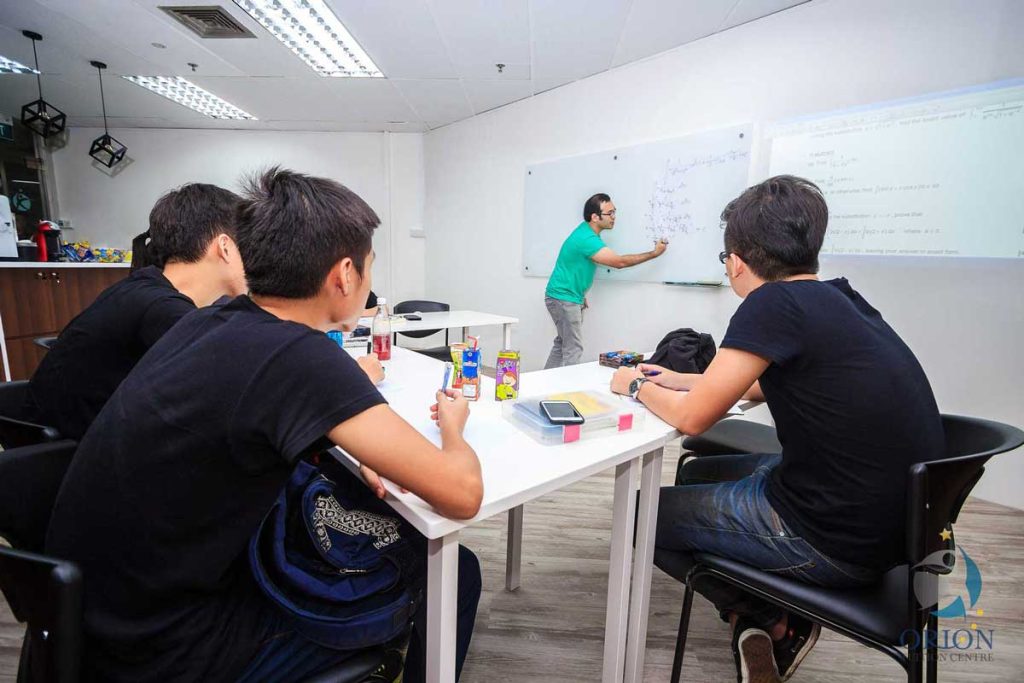
Our established and highly reviewed (do check out our testimonials) program for H2 Physics has consistently achieved 90% A or at least a 2-grade improvement at the GCE ‘A’ Level.
Yishun/Online Classes
Toa Payoh/Online Classes
Toa Payoh Central
Blk 190 Lor 6 Toa Payoh
#04-508A
Singapore 310190
Yishun Chong Pang:
Blk 101 Yishun Ave 5,
#02-95
Singapore 760101
Click here for our 1-on-1 private coaching availability.

GST absorbed with no hidden costs nor deposits.

Average class size of 10

Our tutor regularly takes the initiative to clarify doubts via Zoom and Whatapp.

Hundreds of bite sized summary lessons and guided practice for our registered students to facilitate their revision. Preview Here
H2 Physics is consistently rated as one of the most challenging A-Level subjects in Singapore, and it catches many students off guard — including those who excelled at O-Level Physics. The key difference is that H2 Physics moves from a largely descriptive understanding of physical phenomena to a mathematically rigorous, concept-heavy subject.
Topics like Electromagnetic Induction, Quantum Physics, and Electric Fields require a level of abstract thinking that is genuinely new for most JC students. Additionally, JC lecture-style teaching means less individual guidance than students were accustomed to in secondary school.
Structured tuition fills this gap by providing the individual attention and exam-focused practice that school lectures simply cannot offer.
H2 Physics at Orion is taught by Mr Anthony Lee, who also leads the H2 Mathematics programme. The combination matters — because H2 Physics and H2 Maths are deeply interconnected subjects, and having the same tutor teaching both allows Mr Anthony to draw explicit links between them in ways that benefit every student taking both subjects.
Mr Anthony’s own academic story is an unusual one. He began in the EM3 stream in primary school — the lowest academic stream in the Singapore system at the time — with a PSLE score of 114. He eventually graduated on the NUS Dean’s List on consecutive semesters. That experience of overcoming academic difficulty from the bottom up informs everything about how he teaches Physics.
He understands that H2 Physics is not simply hard content — it is a shift in how students must think. The subject demands abstract reasoning, multi-step application, and the ability to connect physical principles to unfamiliar real-world scenarios. These are learnable skills, not innate talents, and Mr Anthony structures his teaching to develop them systematically.
His Physics lessons are known for their use of visual analogies, simulations, and physical apparatus — making abstract topics like Electromagnetic Induction, Quantum Physics, and Oscillations tangible before introducing exam-level application. Students who have described these topics as incomprehensible in school lectures consistently report clarity after his explanations.
The programme has achieved 90% of students getting an A/B or at least a 2-grade improvement at A-Level.
The topics where students most frequently lose marks in H2 Physics are: Gravitation, Electromagnetic Induction, Quantum Physics, Thermal Physics, Waves and Superposition, and Oscillations.
These topics are abstract, mathematically demanding, and often tested with multi-step problems that require linking concepts across different chapters. Mr Anthony addresses this directly by building students’ conceptual foundation before introducing exam-level questions.
He uses simulation, animations, physical analogies, and worked examples to make abstract concepts tangible. Students consistently describe how topics that felt incomprehensible in school lectures suddenly made sense after his explanations.
H2 Physics and H2 Maths are in fact highly complementary — skills in calculus, vectors, and algebraic manipulation from H2 Maths directly support the mathematical demands of H2 Physics. Students taking both subjects often find that learning them together reinforces understanding in each.
That said, managing both subjects alongside the rest of the JC workload does require good time management and consistent revision. At Orion, Mr Anthony teaches both H2 Maths and H2 Physics, which means he can draw explicit connections between the two subjects.
Many Orion students take both subjects simultaneously and achieve strong results in both.
Taking H2 Physics and H2 Chemistry together is one of the most common subject combinations for students pursuing Science or Engineering at university, and it is very manageable with the right support — though it does require deliberate time management.
The two subjects are more complementary than they might appear. Physical Chemistry topics — particularly Energetics, Electrochemistry, and Atomic Structure — overlap conceptually with H2 Physics areas like Thermal Physics and Electric Fields. Students who develop a strong understanding of one subject often find the corresponding concepts in the other easier to grasp.
The practical challenge is workload. Both subjects are content-heavy, require consistent weekly revision, and have practical examination components. Students who spread revision too thin across all subjects and leave either Physics or Chemistry to the final months consistently underperform relative to their actual ability.
At Orion, a significant number of students take both H2 Physics and H2 Chemistry. Mr Anthony teaches H2 Physics and Ms Agnes teaches H2 Chemistry — and because they work together at the same centre, they are aware of which students they share. This means revision scheduling and cross-subject connections can be coordinated in a way that is not possible when students attend two separate tuition centres.
Past-year paper practice is necessary but not sufficient for H2 Physics. Many students make the mistake of going to papers too early — before their conceptual foundations are solid — and developing the habit of pattern-matching answers without genuine understanding. This approach works for familiar question formats but breaks down when A-Level papers present concepts in unfamiliar contexts, which they consistently do.
The most effective approach has three stages. First, concept mastery — understanding not just what each formula means, but why it applies in certain situations and not others. Topics like Electromagnetic Induction and Quantum Physics have limited formula banks; the marks come from applying those concepts correctly to situations you have not encountered before.
Second, structured topic-by-topic practice — working through questions systematically before combining topics, so weaknesses in individual areas are identified and addressed before they compound under exam conditions.
Third, timed full-paper practice — done after the first two stages, so students are practising exam technique on a foundation of genuine understanding rather than working around gaps they have not fixed.
At Orion, Mr Anthony sequences lessons deliberately around these three stages. Students do not move to full-paper practice until concept mastery has been established in each topic.
Yes — and the answer is the same regardless of which JC your child attends.
Our H2 Physics students come from Eunoia Junior College, Raffles Junior College, Anderson Serangoon Junior College, National Junior College, Nanyang Junior College, St Andrew’s Junior College, Hwa Chong Institution, and other JCs across Singapore.
Across all these schools, the pattern we see is consistent: JC Physics lectures move fast, individual questions are hard to ask in a lecture hall, and students who fall behind in one topic find the next harder as a result — because H2 Physics concepts build sequentially on each other.
What differs between students is not which school they came from, but where their specific foundational gaps lie. Some arrive strong in Mechanics but shaky in Electricity. Others have solid Waves understanding but have never properly consolidated Thermal Physics. Mr Anthony begins by identifying exactly where each student’s gaps are, rather than assuming a starting level.
This is one of the most common issues students face in H2 Physics — and it almost always comes down to the gap between conceptual familiarity and exam application. A student can read about Faraday’s Law and feel they understand it, but freeze when asked a multi-step exam question that applies it to an unfamiliar scenario.
H2 Physics is an application subject. Understanding the theory is necessary but not sufficient. What students need is structured exposure to a wide variety of question types, combined with the ability to identify which concept is being tested and approach it systematically.
This is the core of what Mr Anthony trains students to do — building exam instinct alongside conceptual knowledge.
Yes. The H2 Physics practical exam is a component of the A-Level assessment that tests students’ ability to design experiments, handle apparatus, analyse data, and present conclusions clearly.
Many students focus almost entirely on theory and neglect practical preparation — which can cost them marks they worked hard for in other components.
Mr Anthony uses visual aids, physical apparatus references, and past practical question review to ensure students are comfortable with the format and expectations of the practical exam. This is built into the programme naturally rather than treated as a last-minute add-on.
The earlier the better — a longer runway genuinely increases your child’s chances of doing well. H2 Physics topics in JC1 like Kinematics, Dynamics, Waves, and Thermal Physics form the conceptual bedrock for abstract JC2 topics like Electromagnetism and Quantum Physics. Students who build this foundation early find JC2 far more manageable.
That said, better late than never. For students joining in JC2, Mr Anthony takes a targeted approach: identifying the specific conceptual gaps — often in topics like Electric Fields or Oscillations — that are causing exam application to break down. Summary revision is timed strategically, and our online summary videos allow students to independently revisit JC1 Physics concepts at their own pace outside of class.
Students who joined us just weeks before the A-Levels — often subject to vacancy — have gone on to achieve remarkable improvements. H2 Physics is ultimately an application subject, and with the right exam strategies and conceptual clarity, grade jumps are absolutely achievable even in a short timeframe.
School H2 Physics lectures are designed for large cohorts and cover the syllabus at a fixed pace. There is little room for individual questions, and students who fall behind one week often find themselves compounding that gap over subsequent topics.
At Orion, the class size is capped at around 12 students, which means Mr Anthony can gauge understanding in real time, answer questions immediately, and adjust the pace for the group. Beyond class, students access video summaries, guided practice questions, and WhatsApp consultations.
The result is a support structure that surrounds the student throughout the week — not just for two hours on a Saturday.
No — and we want to be transparent about why.
H2 Physics is fundamentally an application subject. Understanding Faraday’s Law of Electromagnetic Induction, for example, is not the same as being able to apply it correctly to a multi-step exam question involving an unfamiliar scenario. The gap between knowing a concept and applying it under exam pressure is what separates students who score As from those who score Cs — and closing that gap requires repeated, spaced exposure to varied question types over time. It cannot be compressed into a few intensive days.
Crash courses also tend to follow a predictable structure: cover the syllabus at pace, work through common question types, and repeat. For stronger students who are mostly exam-ready, this can serve as a useful recap. But for students who are genuinely struggling — with conceptual gaps in Mechanics, shaky foundations in Waves, or real confusion about Electric Fields — a crash course addresses symptoms rather than causes. The underlying gaps remain, and under actual exam pressure, they resurface.
We are also honest about the commercial incentive that crash courses represent. Running intensive holiday programmes is a straightforward way to generate revenue from families who are anxious about upcoming examinations. That anxiety is real — and it is precisely why we choose not to exploit it. During school holidays, Mr Anthony’s time is extended for our existing students: for consultations, additional practice, and targeted revision. That is where our energy belongs.
For families looking for H2 Physics support, we encourage you to reach out about our regular weekly programme. Starting as early as possible gives your child the runway needed to build the genuine understanding that produces consistent results.
Yes — and we particularly recommend it for H2 Physics, because the way a subject is taught matters enormously when the content is as abstract as Electromagnetic Induction, Quantum Physics, and Oscillations.
Many students and parents tell us they were sceptical before the trial — that they had heard Physics tuition rarely makes a difference, or that their child had already tried another centre without improvement. The trial lesson is our answer to that scepticism. Mr Anthony’s approach to making abstract Physics tangible — through visual analogies, worked examples, and deliberate concept-building — is something that is best experienced rather than described.
The trial policy is the same across all Orion programmes: if your child attends the trial and decides not to continue, the trial fee is fully waived — no questions asked. If your child chooses to enrol, the trial lesson is counted as the first lesson of the programme.
Trial lessons are typically offered at the beginning of the year or when a new class is forming — this minimises disruption to ongoing classes and ensures the trial is as representative of a real lesson as possible.