Yishun/Online Classes
- JC1 (2026): Saturday @ 12.00pm
- JC2 (2026): TBC
Toa Payoh/Online Classes
- JC1 (2026): TBC
- JC2 (2026): Thursday @ 7.30pm

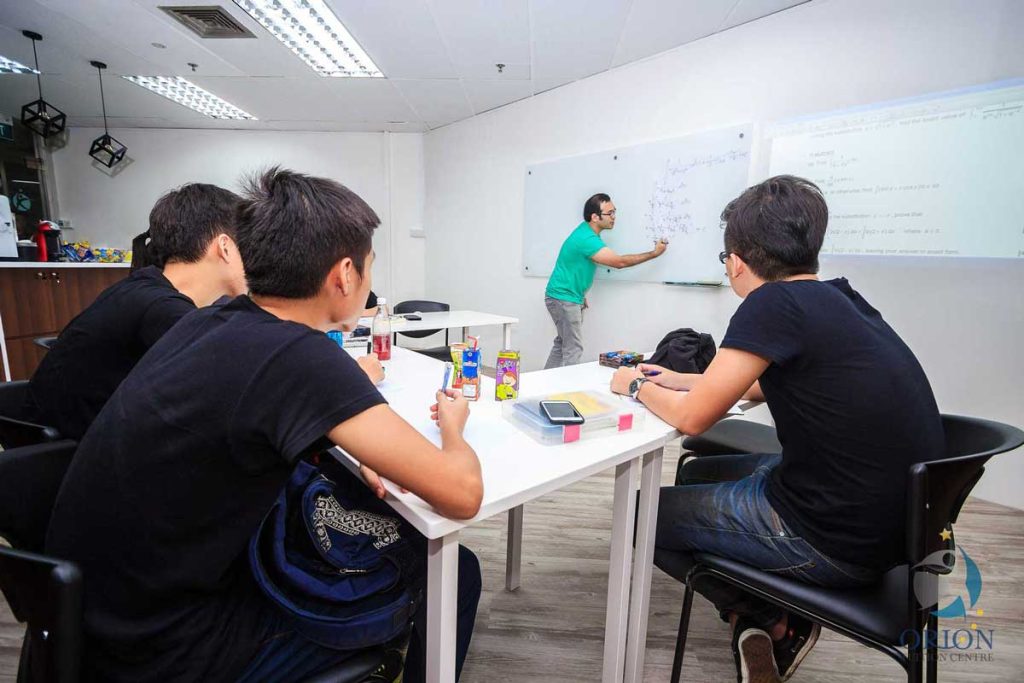
Our established program for H2 Maths has consistently achieved 90% A or at least a 2-grade improvement at the GCE ‘A’ Level.
Yishun/Online Classes
Toa Payoh/Online Classes
Toa Payoh Central
Blk 190 Lor 6 Toa Payoh
#04-508A
Singapore 310190
Yishun Chong Pang:
Blk 101 Yishun Ave 5,
#02-95
Singapore 760101
Click here for our 1-on-1 private coaching availability.

GST absorbed with no hidden costs nor deposits.

Average class size of 10

Our tutor regularly takes the initiative to clarify doubts via Zoom and Whatapp.

Hundreds of bite sized summary lessons and guided practice for our registered students to facilitate their revision. Preview Here
H2 Chemistry is widely regarded as one of the most demanding A-Level subjects in Singapore — and for good reason. Unlike O-Level Chemistry, which rewards structured recall, H2 Chemistry requires students to deeply understand and interconnect concepts across Physical, Inorganic, and Organic Chemistry.
Topics like Chemical Equilibria, Electrochemistry, Reaction Kinetics, and Organic Synthesis involve multi-step reasoning under exam conditions. Many students who scored As at O-Level find themselves struggling in JC1 not because they are less capable, but because the nature of the subject has fundamentally changed.
At Orion, Ms Agnes — a former MOE JC Chemistry teacher — specifically structures lessons around building this deeper conceptual understanding, not just memorisation.
Based on student performance and past-year paper trends, the most commonly failed H2 Chemistry topics in Singapore are: Organic Chemistry (reaction mechanisms and synthesis), Chemical Equilibria, Electrochemistry (including Electrolysis), Transition Elements, and Reaction Kinetics.
These topics require students to apply knowledge across unfamiliar question types — which is exactly where many students lose marks. Ms Agnes dedicates extra lesson time to these high-difficulty topics and provides targeted revision papers.
She also compiles concise definition and formula references so students can revise quickly under exam pressure. Students from Orion often find topics that once seemed impossible became manageable with her structured approach.
The three areas where students most consistently lose marks in H2 Chemistry are Organic Chemistry, Chemical Equilibria, and Electrochemistry.
Organic Chemistry is the most content-heavy section and the hardest to revise efficiently. The challenge is not memorising individual reactions — it is understanding the underlying mechanisms well enough to apply them to unfamiliar molecules in synthesis and elucidation questions. Ms Agnes addresses this by teaching mechanisms conceptually rather than as memorisation lists, and providing targeted practice on the specific synthesis question formats that appear most frequently in A-Level papers.
Chemical Equilibria requires students to reason quantitatively and qualitatively at the same time — interpreting Le Chatelier’s Principle, calculating equilibrium constants, and applying these ideas to industrial processes. Many students understand the concepts in isolation but struggle when questions combine multiple equilibrium ideas in a single structured response.
Electrochemistry — particularly the Electrolysis section — most consistently separates students who score As from those who score Bs. The distinction between electrolytic and galvanic cells, electrode reactions, and factors affecting electrolysis products requires both conceptual clarity and precise answering technique. Ms Agnes dedicates extra lesson time to Electrochemistry throughout the year, not only during revision season.
Yes — and this is one of the most common concerns parents bring to us. B grade at O-Level Chemistry does not disqualify your child from doing well at H2 level.
What matters more is whether their foundational concepts are solid enough to build on, and whether they receive the right structured support early in JC1. At Orion, Ms Agnes is experienced at identifying and filling conceptual gaps from secondary school while simultaneously keeping pace with the JC curriculum.
Students who joined us with weak O-Level Chemistry backgrounds have gone on to achieve distinctions at A-Level with consistent effort and guidance.
At Orion, we do not run practical hand-on sessions. But we prepare them in every other ways — and this is an area that many tuition centres overlook entirely, to the detriment of their students’ final grades.
The H2 Chemistry practical examination (Paper 4) is a separate assessment from the written papers and carries significant weight in the overall A-Level result. It tests students on experimental design, qualitative analysis, data collection and interpretation, and the ability to present findings in a structured, scientifically precise way. These are skills that cannot be developed through theory revision alone.
Ms Agnes incorporates practical preparation into Orion’s H2 Chemistry programme in two ways. Throughout the year, lessons include regular discussion of practical data interpretation and experimental reasoning — so students develop the analytical mindset that Paper 4 demands. Closer to the A-Levels, targeted practical question practice using past practical papers and examiner reports helps students understand precisely what markers are looking for.
Students who attend theory-only tuition consistently find Paper 4 the most stressful part of the H2 Chemistry examination. Orion’s approach ensures the practical component receives proper attention throughout the year, not just in the final weeks.
JC lectures are designed for large cohorts and move at a fixed pace. For students who grasp every concept immediately, school alone may suffice. But H2 Chemistry is a subject where one missed concept in JC1 — say, misunderstanding chemical bonding or mole calculations — can cascade into serious difficulty in JC2.
The question to ask is not whether tuition is necessary in general, but whether your child is keeping pace, asking questions freely, and confident going into tests.
If the answer to any of those is no, structured tuition with a teacher who can address gaps individually makes a tangible difference.
H2 Chemistry at Orion is taught by Ms Agnes Chan — a former MOE Junior College Chemistry teacher with more than 15 years of experience in the A-Level programme.
Ms Agnes’s school teaching background gives her a precise and practised understanding of what Cambridge markers look for in H2 Chemistry answers — and equally importantly, the specific patterns of mistakes that cost students marks at every grade boundary. This is knowledge that comes only from years of marking scripts, preparing students for practical exams, and watching the same misconceptions surface year after year.
Her teaching style is structured and concise. Students frequently describe her notes as clearer than their own school’s materials — which is high praise given the quality of JC teaching in Singapore. She has a particular strength in breaking down Organic Chemistry mechanisms, Chemical Equilibria reasoning, and Electrochemistry applications into frameworks that students can genuinely apply under exam pressure, not just understand in class.
Ms Agnes teaches H2 Chemistry, H1 Chemistry, IP Chemistry, and O-Level Pure Chemistry at Orion. Her approach is consistent regardless of level: identify the student’s foundational gaps first, address them directly, then build toward exam-level application. This is why students who join her with weak O-Level Chemistry backgrounds have gone on to achieve A grades at A-Level.
She is available via WhatsApp and Zoom between sessions, and is known for staying back after class and offering additional consultation sessions in the run-up to the A-Levels.
Yes — and we want to be honest with you: starting earlier always gives your child a longer runway and a higher chance of doing well. But better late than never. The goal now is to maximise every week remaining before the A-Levels.
Ms Agnes structures JC2 Chemistry revision strategically — identifying the highest-weightage topics like Organic Chemistry, Equilibria, and Electrochemistry, and ensuring students have clear, concise notes and targeted practice for each. Critically, she also addresses foundational JC1 gaps — Chemical Bonding, Stoichiometry, Energetics — that quietly undermine JC2 performance if left unresolved.
What gives parents real confidence is this: students who joined Ms Agnes just weeks before the A-Levels — often subject to vacancy — have gone on to achieve meaningful grade jumps. From E to B. With Chemistry, even the Practical component is still very much recoverable with the right targeted preparation.
Exam readiness at Orion is built in from day one, not bolted on at the end. Ms Agnes structures her teaching around the latest examinable question types identified from past-year paper analysis.
Students are exposed to a wide range of question formats — structured essay questions, data-based questions, and free-response items — so nothing in the actual exam feels unfamiliar.
Closer to the A-Levels, Ms Agnes provides targeted revision papers, increases the frequency of timed practice, and offers additional consultation sessions for students who need extra support. The goal is not just to cover the syllabus, but to ensure students can apply what they know under real exam conditions.
Yes — and this is worth addressing directly because parents sometimes wonder whether classes that serve students from different schools can suit their child specifically.
Our H2 Chemistry students come from Eunoia Junior College, Raffles Junior College, Anderson Serangoon Junior College, National Junior College, Nanyang Junior College, St Andrew’s Junior College, Hwa Chong Institution, and other JCs across Singapore.
What Ms Agnes consistently sees across all these schools is that the pace of JC Chemistry teaching leaves little room for consolidation. Lectures move forward on schedule regardless of whether every concept has been absorbed — and H2 Chemistry in particular has topics that build sequentially on each other. A student who is shaky on Chemical Bonding will struggle with Organic Chemistry. A student who never properly understood Redox Reactions will find Electrochemistry very difficult.
Ms Agnes’s approach is the same for every student regardless of school: she identifies where the foundational gaps are before doing H2-level exam work. Students are not thrown into difficult application questions before the underlying concepts are solid. This is why students from different JCs and different academic backgrounds improve together effectively in the same class.
No — and our reasons are rooted in both educational conviction and our values as a centre.
H2 Chemistry is one of the most content-dense A-Level subjects in Singapore. Organic Chemistry alone spans reaction mechanisms, synthesis pathways, and elucidation questions that require genuine mechanistic understanding to answer correctly under exam pressure. Electrochemistry and Chemical Equilibria involve multi-layered reasoning that cannot be meaningfully compressed into a few days. A crash course that attempts to cover these topics quickly almost always results in surface-level familiarity — enough to recognise question types, but not enough to answer them well.
There is also a commercial reality worth naming directly. Crash courses — particularly those marketed in the weeks before major examinations — are often designed to capitalise on parents who are worried about their child’s results. That anxiety is real and understandable. But in our experience, the students who need crash courses most are those with the weakest foundations, and these are precisely the students who benefit from them least. Their gaps are structural, not just revision-related, and no amount of intensive drilling in a short period fixes a structural problem.
During school holidays, we direct our tutors’ time toward our existing students: extending Ms Agnes’s consultation availability, providing additional targeted practice papers, and offering support for students approaching key school assessments. The families who have committed to year-round learning with us are our priority — not a last-minute cohort assembled for profit.
If your child needs H2 Chemistry support, we encourage you to contact us about our regular weekly programme. The consistent, relationship-based learning we provide is what produces our results.
Yes — and for H2 Chemistry in particular, a trial lesson serves a purpose beyond simply seeing whether your child likes the class.
H2 Chemistry students arrive with very different foundations — some have strong O-Level Chemistry bases, others have significant gaps that need to be identified early. Ms Agnes uses the trial lesson not just as an introduction but as an informal diagnostic: she gets a sense of where your child currently is, what their school has covered, and where the gaps are most likely to be. This means the first proper lesson after the trial is already more targeted than it would otherwise be.
The trial policy is the same across all Orion programmes: if your child attends the trial and decides not to continue, the trial fee is fully waived — no questions asked. If your child chooses to enrol, the trial lesson is counted as the first lesson of the programme.
Trial lessons are typically offered at the beginning of the year or when a new class is forming — this minimises disruption to ongoing classes and ensures the trial is as representative of a real lesson as possible.